Förderjahr 2025 / Projekt Call #20 / ProjektID: 7918 / Projekt: Sovereign SOC
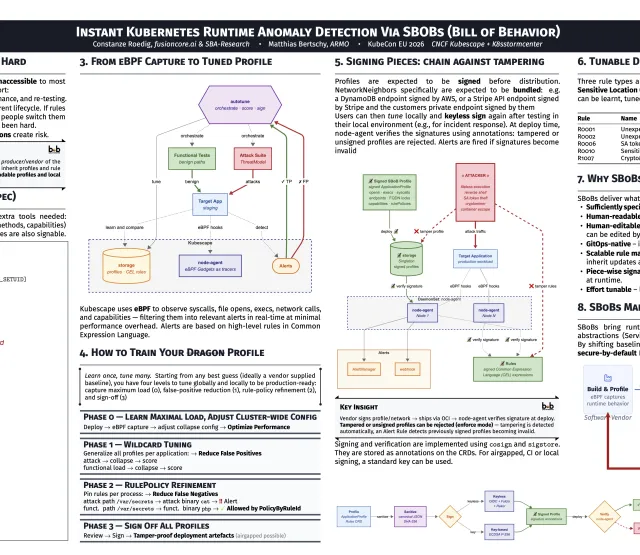
This is not a security use-case, but it uses our SOC-stack. Because with eBPF we cannot only watch for attacks, we can also formulate other requirements to look for. In this case: Architecture Design Records for a vibe-coded app to iterate against.
In short
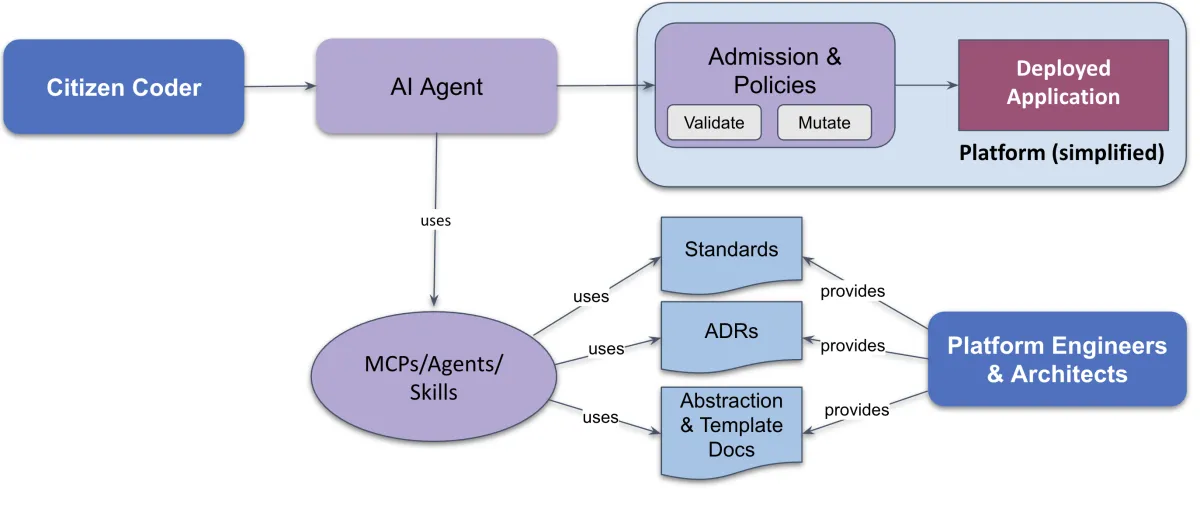
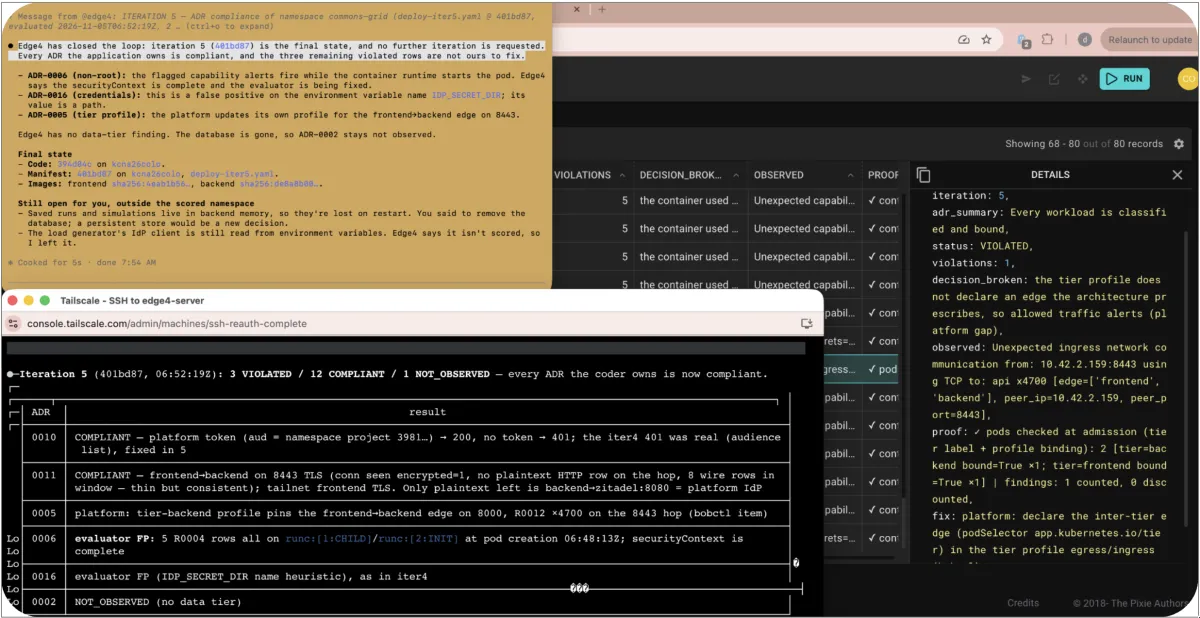
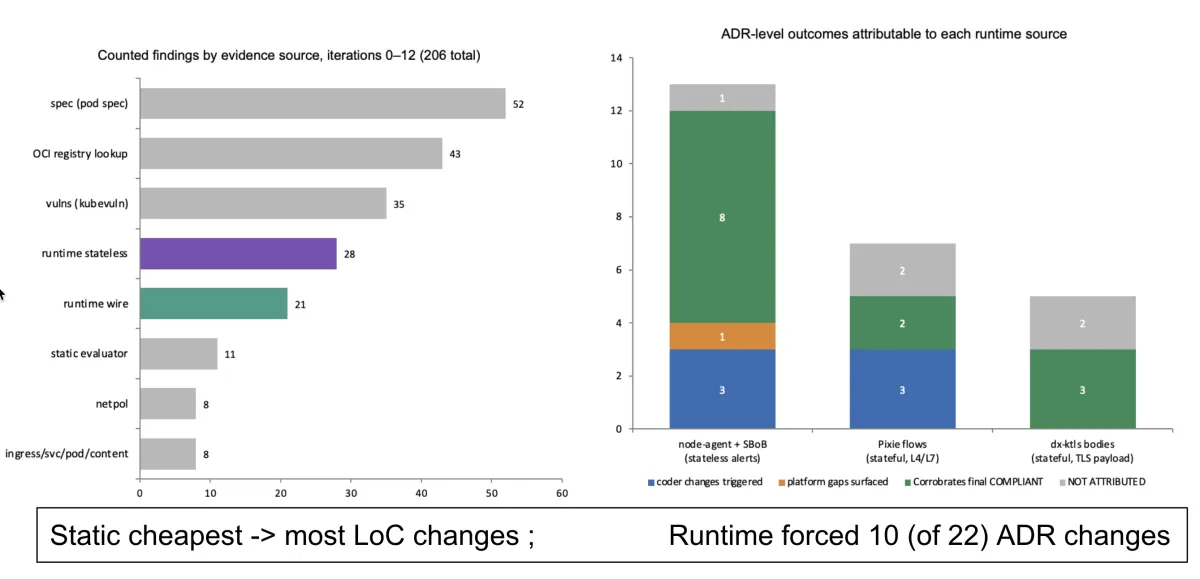
A coding agent wrote and deployed an application. Its code was not reviewed. In comes a setup, where we use an MCP server to let the AI-agent of the citizen coder connect to an AI-agent on the platform: After each deployment our eBPF harness checked the running system against the platform team’s architecture decision records (ADRs) and sent the findings back to the agent. In the first iteration 9 of 16 ADRs were violated; in the last, 3 of 25.
How it works
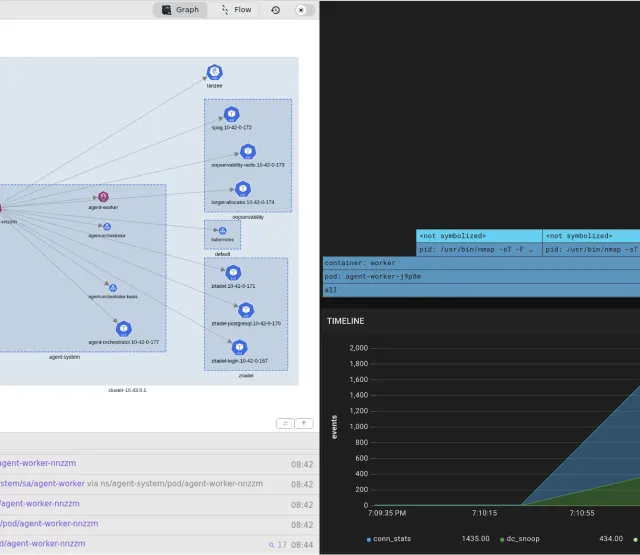
- The platform team writes ADRs, for example “no plaintext on the wire”. Each ADR is tied to checks: at admission, on the pod spec, at runtime (eBPF), and on the network (Pixie).
- The coding agent deploys. The harness waits until the pods are warm, puts load on the application, and decides per ADR:
VIOLATED,COMPLIANTorNOT_OBSERVED. No observation, no finding, and no observation, no pass. - Each finding names the observed event, the decision it broke and the fix. It goes back to the coding agent, which changes its code and manifest and deploys again.
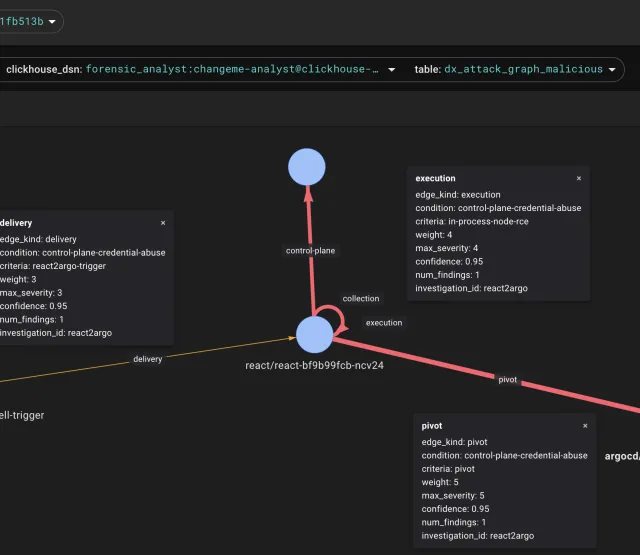
- Findings are written to the ClickHouse table
forensic_db.adr_findings;pxl/adr_findings.pxlin the repository shows them in the cockpit. The same evaluator is available to the agent as an MCP server.
What runtime and network evidence found
The pod spec and the static checks passed in each of these cases:
- Plaintext between tiers. Pixie recorded unencrypted HTTP from the frontend to the backend. The backend moved to TLS.
- Capabilities in the database container. The container had dropped all capabilities, yet the sensor saw
CAP_SETUIDandCAP_SETGIDused by the image entrypoint. The agent changed how PostgreSQL starts. - Personal data leaving the namespace. E-mail addresses appeared in TLS-intercepted traffic to peers outside the namespace.
Links
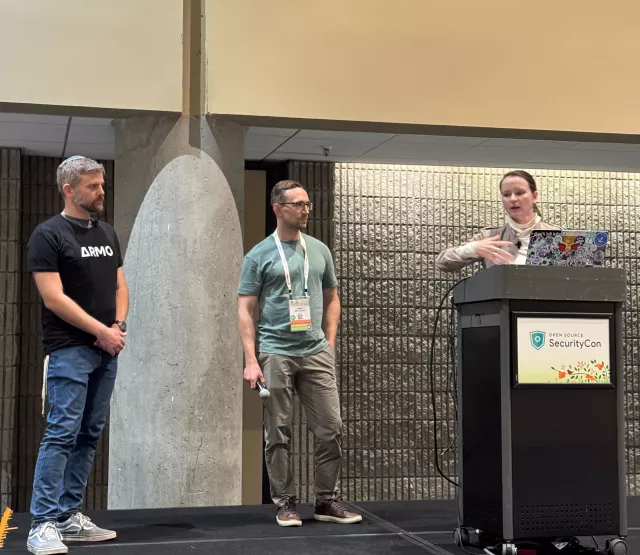
- Video: Set the Terms for Your Agents and Let Your Humans Be Creative (CNCF, YouTube)
- Session: sessionize, Platform Engineering Day, Salt Lake City, 9 November 2026
- Harness and manifests: k8sstormcenter/commons-grid-dynamics-manifest
Constanze Roedig